
Master's in Neurotechnology: Land an Industry Role in Two Years

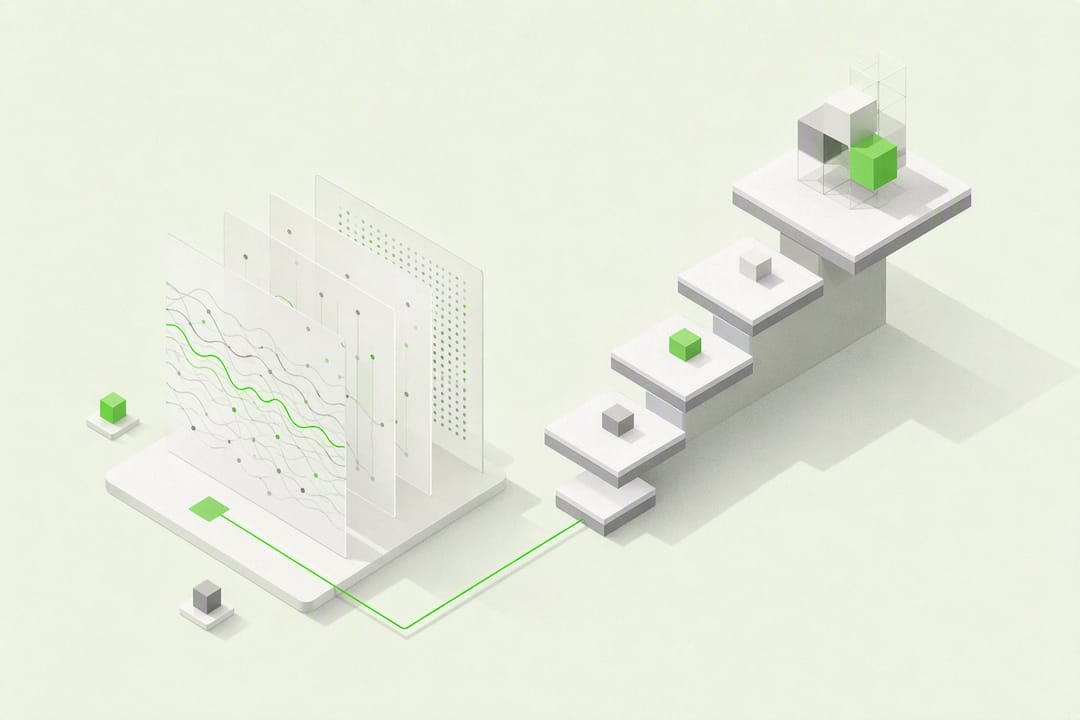
A master’s in neurotechnology trains engineers and neuroscientists to design and translate neural interfaces and neuro-data systems into real products and research. It blends neuroscience, signal processing, and machine learning into one discipline. Your first decision is research versus applied: choose a thesis-driven MRes if a PhD is next, or a professional master’s if you want an industry role within two years. Either way, screen every program for translational training, real lab access, and active industry ties before you apply.
TL;DR:
The best programs combine hands-on lab work with instruction in regulatory pathways and real data access, especially for clinical translation and device commercialization.
Strong industry and hospital partnerships, with documented projects and alumni outcomes, significantly boost job prospects after graduation.
Curricula that teach current decoder architectures like transformers and include explicit coursework in translational skills prepare students better for the rapidly evolving neurotech field.
Admissions should prioritize programs with active faculty research, recent industry connections, and concrete internship or capstone project opportunities, rather than shiny rankings.
Tuition costs vary widely, but applicants should verify current fees directly, considering additional expenses like travel, residency, and living costs for hybrid or campus-based programs.
Table of Contents
Core Curriculum: The Courses and Labs That Build Real Skills
Why Translational Training and Lab Access Decide Your Job Prospects
Why Interdisciplinary, Translational Programs Are Gaining Ground
Notable Master’s Programs in Neurotechnology Worth Researching
Apply Your Neurotechnology Training Where Companies Are Actually Hiring
What Type of Master’s Neurotechnology Program Fits You
Not every program with “neurotechnology” in the name teaches the same thing, and the format you pick shapes your career options more than most applicants realize.
Research-oriented degrees (MRes, thesis-track M.S.) suit students aiming for a PhD or a research scientist role at a national lab or medtech R&D division. You will spend a year or two embedded in a single lab, publishing, and building the kind of first-author paper that opens doctoral admissions doors.
Applied or professional master’s tracks, often 12 to 18 months, target students who want to walk into a BCI startup or hospital device team ready to build. These programs replace a long thesis with capstone projects, industry practicums, and coursework weighted toward engineering execution over publication.
Accelerated tracks exist for students who complete qualifying undergraduate coursework early, compressing a two-year program into three or four semesters.
Delivery mode matters just as much:
Full campus programs give you physical lab time with EEG rigs, microcontroller kits, and neural recording hardware you cannot replicate remotely.
Hybrid programs mix online coursework with intensive on-site lab weeks, a workable compromise for working professionals.
Fully online programs work for the theory and coding side of neurotechnology but rarely deliver hands-on hardware skills without a partner lab arrangement.
If your goal involves physical device prototyping, prioritize campus or hybrid access over convenience.
Core Curriculum: The Courses and Labs That Build Real Skills
A strong program covers neurophysiology, signal processing, neural interfaces, machine learning for neural data, neuroimaging, and neuroethics as its academic core. What separates a good program from a mediocre one is how much of that theory gets tested against real data and hardware.
Look for hands-on components like:
Brain computer interface (BCI) demos using EEG or intracortical datasets
Sensor and electrode prototyping in a wet lab or engineering shop
Neuromorphic computing exercises that model neural circuits in silicon
Clinical study design projects that mirror how a real trial gets structured
On the technical skill side, graduates should leave with working fluency in Python and machine learning libraries, experience building signal-processing pipelines from raw neural data to usable output, and a working grasp of experimental methods and regulatory basics. Modern programs increasingly teach transformer-based decoding architectures, which recent research shows reduce calibration burden and improve decoding accuracy compared to older linear models. That is not a niche add-on anymore; it is becoming standard curriculum in serious neurotech programs.
Pro Tip: Before applying, check whether the syllabus lists a specific decoder architecture (transformer, RNN, or CNN) by name. If it only says “machine learning,” the curriculum probably has not been updated in a few years.
Why Translational Training and Lab Access Decide Your Job Prospects
The gap between a diploma and a hiring offer usually comes down to one thing: whether your program taught you to move an idea from bench to bedside, or just to bench.
Translational training covers three areas that most academic-only programs skip entirely. It teaches basic regulatory pathways such as FDA and EMA device clearance processes, preclinical and clinical study design, and commercialization fundamentals like reimbursement and market access. Course curricula built specifically for neuroengineering translation structure this as a progression through process, preclinical, clinical, and commercialization modules, which mirrors how device companies actually move products forward.

Lab access is the second filter. Ask what equipment students actually touch: EEG or intracortical recording systems, neural signal amplifiers, or access to public datasets through platforms like Neurodata Without Borders. A program that outsources “lab work” to a shared university facility with a three-month waitlist is not offering the same experience as one with a dedicated neurotech lab.
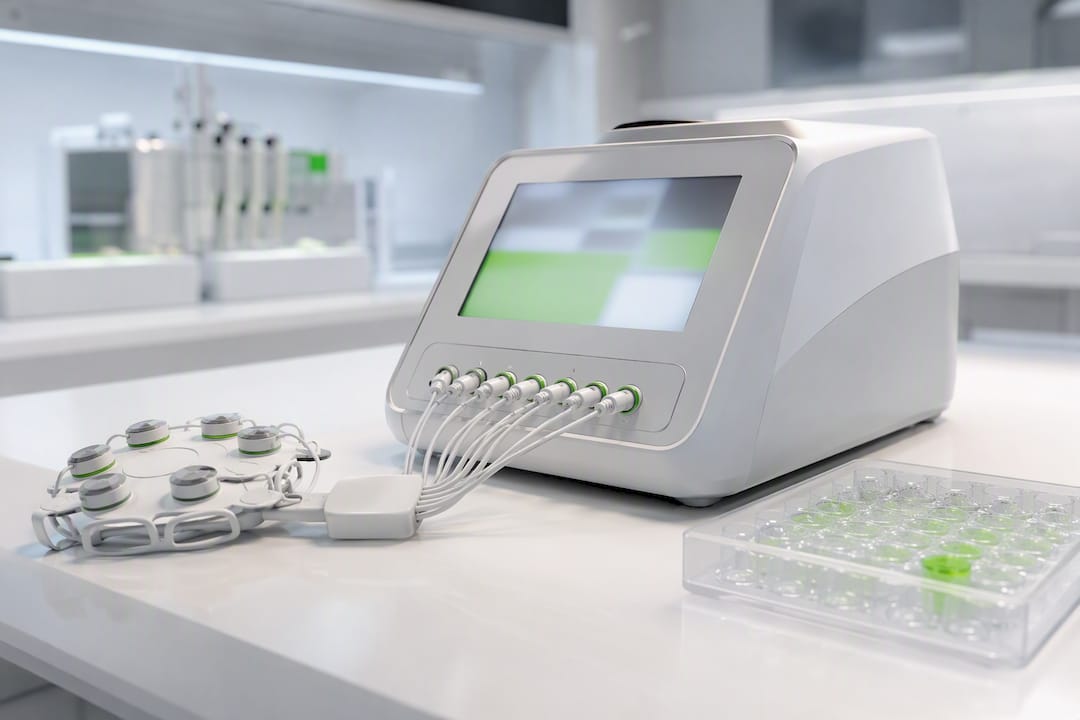
Industry collaborations, from sponsored capstone projects to structured internships and recruiting demo days, materially affect how fast graduates land roles and whether they can access early-stage funding or fellowship opportunities.
Admissions, Timeline, and Paying for the Degree
Getting in and paying for it are the two questions every applicant puts off, and both deserve a plan before you start filling out applications.
Prerequisites: Most programs expect a bachelor’s in engineering, computer science, neuroscience, physics, or applied math, plus coursework in linear algebra, calculus, and at least one programming language. If your background is light on programming, resources like MIT OpenCourseWare and INCF TrainingSpace offer free preparatory material in computational neuroscience and dataset handling before you apply.
Duration and credits: Full-time programs typically run 12 to 24 months depending on whether they include a thesis. Part-time options stretch that to three or four years, and accelerated tracks for qualifying undergrads can compress the timeline further.
Funding: Look for research assistantships and teaching assistantships tied to funded labs, university-specific scholarships, and industry sponsorships tied to capstone projects. Ask admissions directly what percentage of the cohort receives funding rather than assuming it is standard.
Where a Master’s in Neurotechnology Actually Leads
Graduates rarely end up in one predictable job. The degree maps to a surprising spread of roles depending on which skills you emphasized during your program.
Common titles include neuroengineer, neural data scientist, BCI researcher, medtech product engineer, and translational scientist bridging lab research with regulatory filing. Hiring sectors span medical device companies, AI research labs, university spinouts, and defense or aerospace divisions working on human-machine interface systems.
Positioning your experience differently for different sectors makes a real difference:
For medtech roles, emphasize any regulatory coursework, clinical study exposure, or device prototyping projects.
For AI research roles, emphasize your decoder architecture work, published code repositories, and any conference-style project presentations.
For BCI-specific roles, direct evidence of independent BCI use and stability, like the kind demonstrated in a nearly two-year, extensive independent intracortical BCI deployment, shows employers exactly what “production ready” looks like in this field.
Build your hiring-ready portfolio while still enrolled: public code repositories, documented lab projects, and participation in any clinical study, even a small one, all count as evidence a resume alone cannot provide.
How to Choose the Right Program: Your Evaluation Checklist
Comparing programs side by side gets easier once you know exactly what to ask instead of trusting a glossy brochure.
Run every program candidate through these ten questions:
What percentage of coursework is hands-on lab work versus lecture?
What hardware and datasets do students get direct access to?
Does the curriculum include regulatory pathways (FDA, EMA) explicitly?
Are industry partners named, and do students work on their actual projects?
Is there a recruiting demo day or equivalent hiring pipeline event?
What are recent graduate placement outcomes, by role and sector?
Can I speak to two or three recent alumni directly?
What funding, scholarships, or assistantships are available, and to what percentage of the cohort?
Is the degree accredited, and by which body?
What does a typical capstone or thesis project look like, with an example?
Pro Tip: If admissions cannot produce a specific alumni contact or a sample capstone project within a week of asking, treat that as a red flag rather than an oversight.
Verify every claim yourself. A program that cannot name its industry partners or produce a placement rate is asking you to take its marketing at face value.
Why Interdisciplinary, Translational Programs Are Gaining Ground
Field progress backs up the shift toward translational curricula. The long-term, independent use of an intracortical BCI for speech and cursor control, sustained for nearly two years outside a lab setting, shows this field has moved past proof-of-concept into practical deployment. Programs that still teach neurotechnology as pure theory are training students for a field that no longer exists. Curricula built around regulatory and commercialization coursework reflect where employers actually need graduates to start contributing.
Notable Master’s Programs in Neurotechnology Worth Researching
Program design varies more than most applicants expect, and knowing the common tracks helps you read a syllabus with sharper eyes.
Some institutions structure their neurotechnology degrees around distinct specialization tracks. A program might offer separate paths in Neural Interfaces & Robotics for students focused on hardware and prosthetics, and Neural Computation & AI for those focused on decoding algorithms and data science, alongside a straightforward applied versus research master’s split. Program structures like Carnegie Mellon’s M.S. in Neural Technologies illustrate this pattern, giving students a way to specialize without abandoning the interdisciplinary core.
Other programs lean harder into software and signal processing, useful if your goal is a neural data science role rather than hardware engineering. Still others prioritize clinical translation, building coursework directly around hospital partnerships and device commercialization.
When comparing options internationally, weigh accreditation status, the degree type (MSc versus MRes versus a professional master’s), and how explicitly the program states its industry partnerships. A page that lists partner companies by name and describes actual project outcomes tells you more than a page that uses only generic language about “industry engagement.” Metapilotacademy’s Master in Neurotechnology is one example built specifically around this kind of stated corporate collaboration model, alongside programs at research universities with strong neuroscience departments. Compare curriculum documents directly rather than relying on rankings alone, since neurotechnology as a field is too new and too fragmented across departments for rankings to capture program quality reliably.
Industry and Hospital Partnerships That Actually Matter
A partnership listed on a webpage and a partnership that shapes your coursework are two very different things, and the distinction is worth digging into before you commit.
Real interdisciplinary collaboration shows up in a few concrete forms: sponsored capstone projects where a company defines the problem and evaluates the outcome, joint appointments where faculty split time between a university lab and a hospital or corporate R&D division, and shared datasets that let students work with real clinical or industry data instead of synthetic benchmarks.
Hospital partnerships matter most for anyone aiming at clinical translation. A program tied to a hospital’s neurology or neurosurgery department gives students exposure to patient populations, IRB processes, and the practical friction of running a study inside a clinical setting, none of which a purely academic lab can replicate. Industry partnerships matter most for anyone aiming at product roles. A company that sponsors capstone projects usually also interviews the students who worked on them, which is the closest thing to a guaranteed foot in the door that graduate school offers.
When you evaluate a program’s partnerships, ask for specifics: which companies or hospitals, how many students worked with them last year, and what those students did afterward. Vague claims about “strong industry ties” without names or numbers usually mean the partnership exists on paper more than in practice.
What Graduates Say About Making the Leap
Career outcomes in neurotechnology vary widely depending on the specialization a student chooses and how aggressively they pursue hands-on projects during the program.
Students who came from a straight computer science background often describe the neuroscience coursework as the harder adjustment, while those from a neuroscience or biology background more often struggle with the programming and signal-processing load. Programs that build in bridging coursework during the first semester tend to produce more confident graduates by the time capstone projects begin.
The clearest throughline across successful outcomes is early specialization paired with a concrete project. Students who picked a lane, whether that meant BCI decoding, neuromorphic hardware, or clinical translation, by their second semester and built a portfolio project around it consistently reported smoother transitions into industry roles or PhD admissions than students who kept coursework broad through graduation.
Alumni who moved into medtech product roles frequently point to their capstone or internship project as the single most useful thing they can discuss in interviews, more so than coursework grades or even publications. That pattern holds across programs: a demonstrated project beats a transcript line every time a hiring manager is deciding between two similarly credentialed candidates.
Faculty Expertise and Where Research Focus Areas Diverge
The person teaching your signal processing course matters more than the course title, and faculty research focus tells you where a program’s real strengths sit.
Programs built around neural engineering departments tend to have faculty split between electrical engineering and neuroscience backgrounds, with research spanning implantable electrode design, closed-loop neuromodulation, and decoding algorithm development. Programs housed inside computer science or AI departments lean toward faculty focused on machine learning architectures for neural data, often with less hands-on hardware exposure but stronger computational depth.
Clinically affiliated programs bring in faculty who split time between a university lab and a hospital’s neurology, neurosurgery, or physical medicine department. That affiliation shapes coursework toward patient-facing device design and regulatory considerations far more than a purely engineering-focused faculty roster would.
Before applying, look up two or three faculty members’ recent publications directly. A professor whose most recent first-author paper is five years old is likely not running an active lab, regardless of what the program’s website claims. Active, recently published faculty in neural interfaces, computational neuroscience, or neuromorphic systems are the strongest signal that a program’s research focus areas match its marketing.
What Neurotechnology Master’s Programs Typically Cost
Tuition for neurotechnology master’s programs varies enormously depending on country, institution type, and whether the program is public or private, so treat any single number you see online with caution.
Public university programs in many countries charge substantially less than private institutions, particularly for domestic or resident students, while international students often pay a separate, higher tier regardless of the institution. Private universities and specialized technical academies typically set tuition independently of public fee structures, and some tie total cost to program length, since an 18-month applied master’s costs less overall than a two-year research track even at a similar per-semester rate.
Because published tuition figures shift year to year and vary by residency status, the most reliable approach is to request current tuition directly from each program’s admissions office rather than relying on aggregator websites. Metapilotacademy lists its own current pricing and plans directly rather than through third-party estimates, which is a reasonable standard to hold any program you are seriously considering.
Beyond tuition, budget for a registration fee, which many institutions charge as a one-time cost separate from per-semester tuition, and factor in whether the program requires campus residency for lab components, since travel and housing costs for hybrid programs can add up quickly if you are relocating temporarily for intensive lab weeks.
Internship and Co-op Structures Worth Asking About
An internship bolted onto the end of a program is very different from one built into the curriculum, and that distinction affects how much real experience you walk away with.
The strongest programs integrate internships or co-op placements directly into the credit structure, meaning a semester of industry work counts toward your degree rather than existing as an optional summer add-on. This matters because credit-bearing internships tend to come with more structured mentorship and clearer project ownership than informal placements students arrange on their own.
Look for programs that name specific placement partners, whether that is a medical device company, a hospital’s biomedical engineering department, or a research lab at a partner institution. Ask how placements are assigned: some programs match students to partners based on research interest, while others leave the search entirely up to the student, which shifts significant burden onto you during an already demanding academic schedule.
Co-op structures, common in longer applied master’s tracks, alternate semesters of coursework with semesters of paid industry work, stretching the total program length but giving students a paycheck and a resume line before graduation. For students without existing industry contacts, a program with a formal, credit-bearing placement structure is worth prioritizing over one that simply encourages students to “network” their way into an internship independently.
What the Data Actually Tells Applicants to Prioritize
The conventional advice for choosing a graduate program, that reputation and ranking matter most, does not hold up well in a field this new. Neurotechnology has not existed as a distinct discipline long enough for rankings to mean much. What separates strong outcomes from mediocre ones is translational depth: whether a program teaches regulatory pathways, gives students real hardware or dataset access, and connects coursework to an actual industry or hospital partner.
The evidence points in one direction. Fields moving as fast as BCI decoding, where transformer-based architectures are reshaping what “state of the art” means within a couple of years, punish programs that teach static theory instead of current tools. Applicants should prioritize curriculum currency and translational structure over brand name every time those two signals conflict.
Some neurotechnology programs emphasize industry-designed projects and direct corporate ties, reflecting the conviction that a degree earns its value by preparing students to build something someone will actually use. That is the standard every applicant should hold a program to, regardless of where they end up enrolling.
— Metapilot
Apply Your Neurotechnology Training Where Companies Are Actually Hiring
Metapilotacademy’s Master in Neurotechnology is built directly around the checklist that matters most: an interdisciplinary curriculum spanning neuroscience and engineering, industry-designed projects co-created with partner companies, and recruitment pathways that connect graduates to hiring teams before graduation rather than after.
[

While many programs treat industry exposure as an optional add-on, some structure it into the degree itself, giving students access to demo days and direct recruitment events tied to corporate partners. If you are also weighing a broader AI specialization alongside neurotechnology, the program catalog lays out admissions requirements, course modules, and delivery formats side by side. Review the program details and reach out to admissions to ask the ten questions from the checklist above directly, then request a current tuition breakdown before you commit to any application cycle.
Sources
For deeper reading, review the Nature Medicine BCI study on long-term independent use, the translational neuroengineering curriculum structure, and Georgia Tech’s translational resources for program design context.
FAQ
Is a Master’s Degree in Neuroscience Worth It?
It depends on the career target: a pure neuroscience master’s suits research or clinical paths, while a neurotechnology master’s adds engineering and data skills that open device design, BCI, and medtech roles. For students targeting industry within two years, the added engineering coursework generally makes a bigger difference in hireability.
What Is the Difference Between Neuroscience and Neurotechnology?
Neuroscience studies how the brain and nervous system function, while neurotechnology applies engineering, signal processing, and machine learning to build tools that interface with or interpret that biology. A neurotechnology master’s, like Metapilotacademy’s Master in Neurotechnology, sits at that intersection deliberately, training students in both.
Can You Get a Master’s in Neuropsychology Online?
Some neuropsychology-focused programs offer online or hybrid coursework, but the clinical assessment components typically require in-person supervised practice. Neurotechnology programs face a similar constraint: theory and coding transfer well online, but hardware and lab work usually need at least some campus or hybrid time.
Which Master’s Degree Is Most in Demand Right Now?
Demand is rising fastest for programs blending computational skills, particularly machine learning for neural data, with hands-on neural interface experience, since employers increasingly want graduates who can both build decoding models and understand the hardware generating the signal. Programs teaching current architectures like transformer-based decoders are positioned closest to what medtech and BCI companies are actively hiring for.
How Long Does a Master’s in Neurotechnology Take?
Full-time programs typically run 12 to 24 months depending on whether they include a thesis, while part-time study can stretch to three or four years. Accelerated tracks exist for students who complete qualifying prerequisite coursework before enrolling.
Recommended
Comments